Turkey Rug
The Turkey Rug stitch is one of the most playful and rewarding techniques in crewelwork. It allows you to move beyond flat surface stitches and into the world of texture, volume, and 3D effects.
I personally love using this stitch to bring life to woodland creatures—it’s what I used to create the fuzzy body of the bumblebee and the bushy tails of the rabbit and squirrel in my designs.
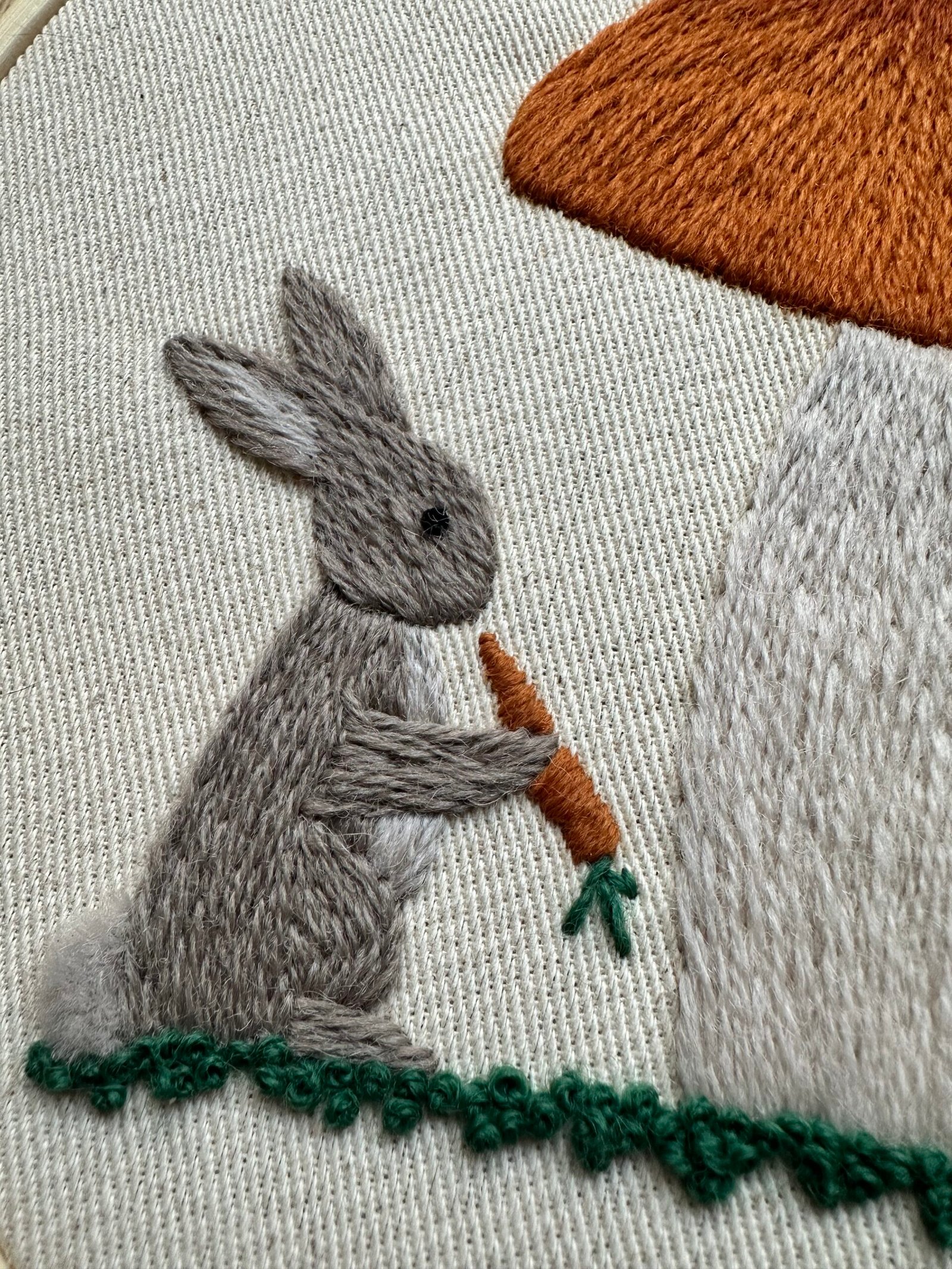
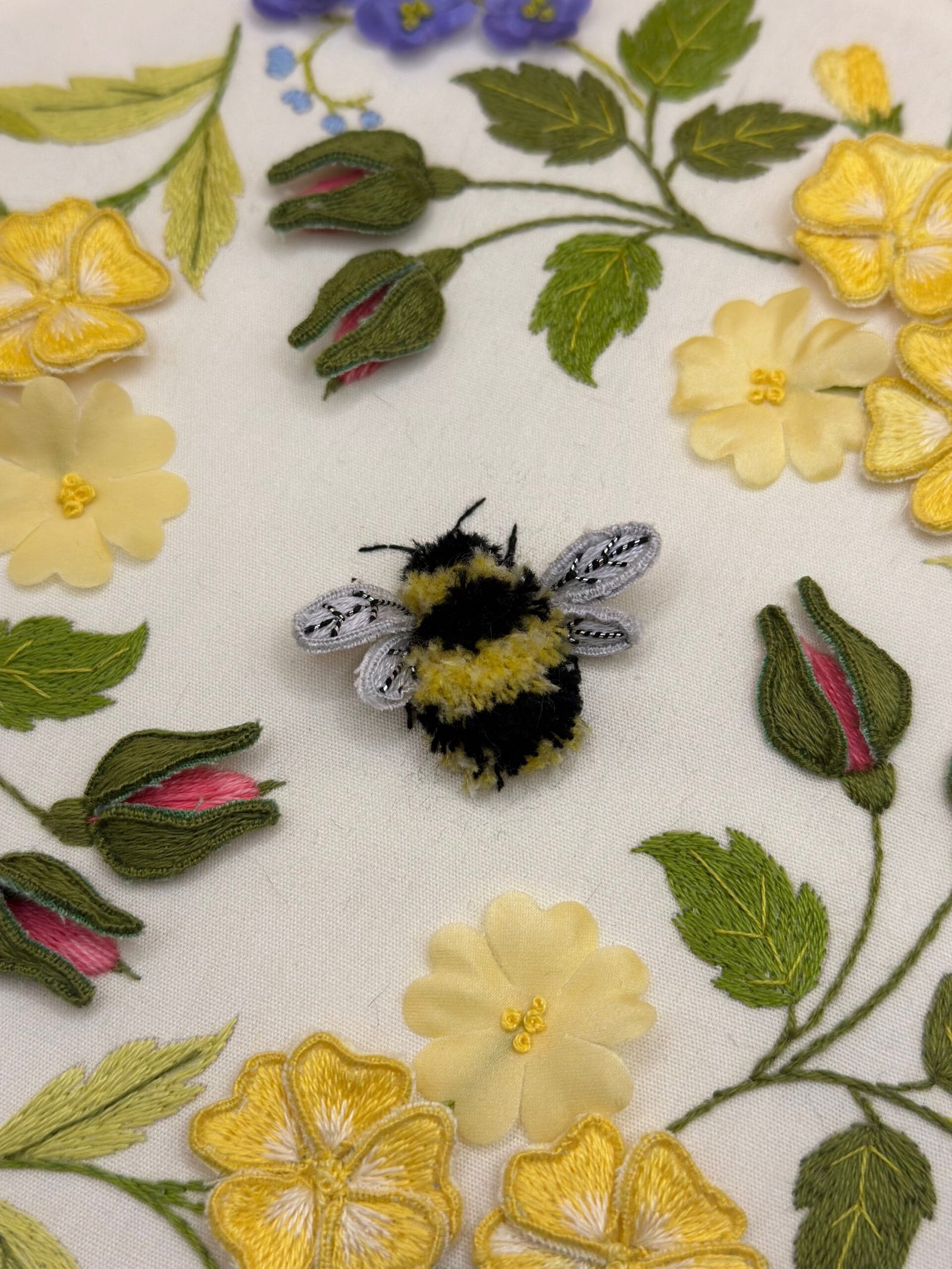
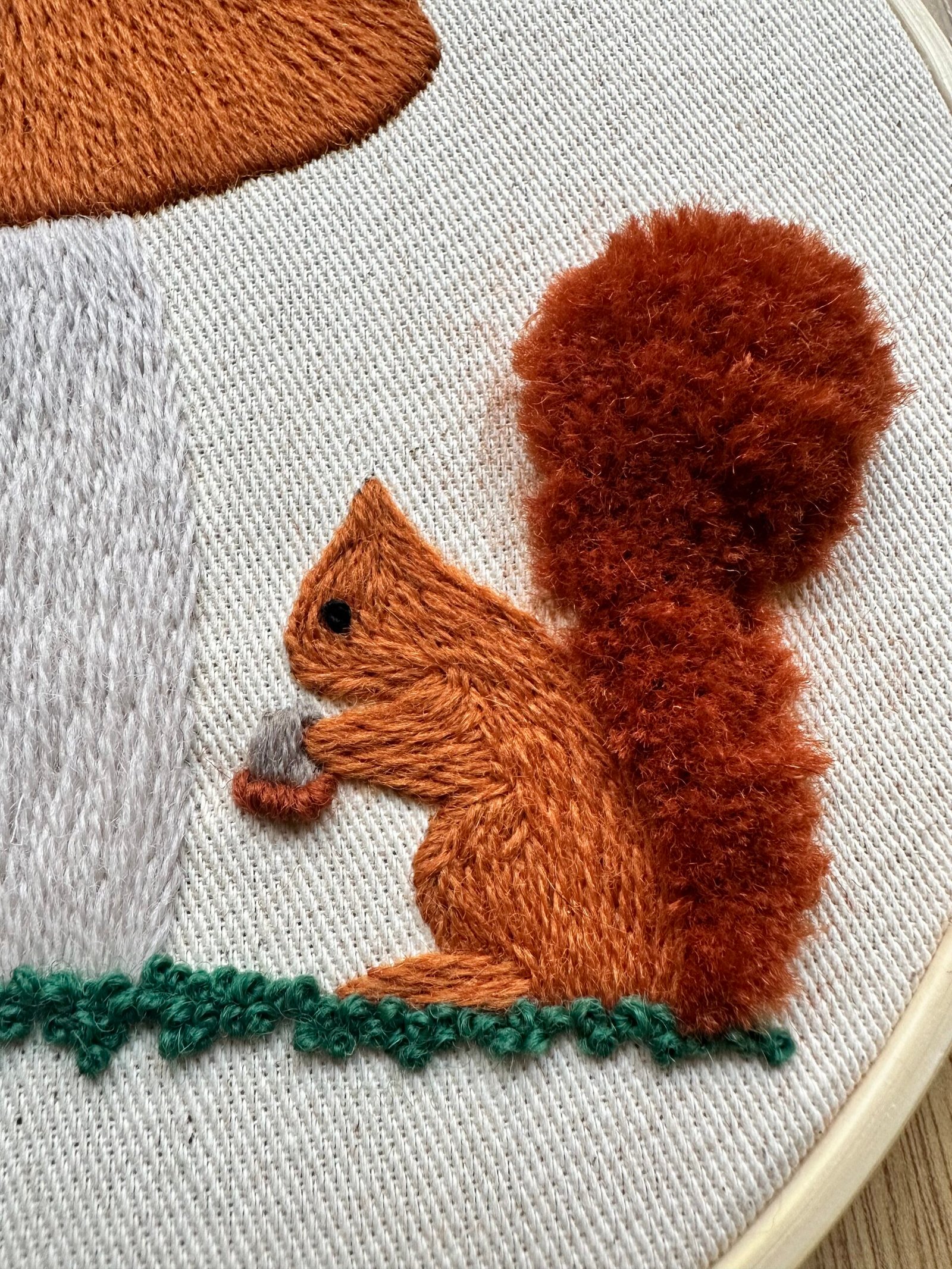
The Secret to Volume
The magic of this stitch happens in two stages: first, you fill a shape with loops, and then you “mow” them down with scissors to create a plush, carpet-like pile.
To fill larger areas effectively, don’t be afraid to use multiple strands:
- Cotton: I recommend 3 strands.
- Wool: I recommend 2 strands.
How to Stitch: The “No Knot” Method
One of the best things about Turkey Rug is that you don’t need to start or finish your thread with traditional knots.
- The Start: Bring your needle down through the fabric, but leave a “tail” of thread hanging on the front side.
- The Loops: Create a series of loops approximately 4–5mm high. You can adjust this height based on your goal. For my squirrel’s tail, I made the loops longer at the top and shorter at the base to create a natural, tapered volume.
- The Tension: Be careful not to pull too hard when bringing the needle down, or you might accidentally shrink your previous loop! I find it helpful to hold the loop in place with my left hand while slowly pulling the thread through with the right.
- Density: Your loops don’t need to touch exactly, but keep them close enough so that no fabric shows through once they are cut.
- The End: When your thread runs out, simply leave the end hanging on the top of your work.
The “Haircut” (Trimming)
Once your area is completely filled with loops, it’s time for the most satisfying part: the trim.
- Take sharp embroidery scissors and snip the top of every loop.
- Work slowly and gradually. It is much easier to cut a little bit at a time than to fix a patch that was cut too short!
- Pro Tip: Once you are happy with the shape, use a lint roller (the kind used for pet hair) or a piece of tape to clean up the loose fibers. This keeps your embroidery pristine and prevents the tiny thread “dust” from getting stuck in your other stitches.
Why use Turkey Rug?
Whether you are making a fluffy animal or a textured flower center, Turkey Rug adds a tactile element that invites people to touch your work. It transforms a flat piece of fabric into a miniature sculpture.
Have you tried the Turkey Rug stitch yet? I’d love to see your “fuzzy” results! Tag me on social media @ArtisSalander.